Our website uses cookies to improve and personalize your experience and to display ads (if any). Our website may also include third-party cookies from services such as Google AdSense, Google Analytics, and YouTube. By using the website, you consent to the use of cookies. We have updated our Privacy Policy. Please click the button to view our Privacy Policy.

Blog

How are cybersecurity threats influencing tech spending priorities?

How ransomware and AI phishing influence technology investment choices

Cybersecurity threats have evolved from a purely technical issue into a pivotal business risk, and the rise in both the complexity and frequency of cyberattacks has prompted companies in every sector to rethink how they distribute their technology budgets, with spending now shaped not only by ambitions for innovation and expansion but also by a growing emphasis on resilience, risk mitigation, and compliance with regulatory demands.The Growing Surge of Digital Cyber ThreatsModern cyber threats include ransomware, supply chain attacks, cloud misconfigurations, phishing campaigns powered by artificial intelligence, and nation-state level espionage. High-profile incidents affecting healthcare systems, financial institutions, and critical…

Read More
How are electrolyzer costs and efficiency improving with new materials?

How are structural component upgrades lowering electrolyzer costs and boosting performance?

Electrolyzers use electricity to separate water into hydrogen and oxygen, and their overall economics shape whether clean hydrogen can rival fossil-based options in sectors such as industry, transportation, and energy storage. In the past, limited efficiency and high upfront costs restricted widespread use. Over the last decade, materials science has driven major advances, transforming catalysts, membranes, electrodes, and structural elements. These innovations have steadily reduced system costs per kilowatt while boosting efficiency and operational lifespan.Key factors shaping the overall cost of electrolyzersThe cost of an electrolyzer is not driven by any single component, so progress emerges from a range of…
Read More
Why are subscription models evolving toward usage-based pricing?

Why subscription models are moving toward usage-based pricing

Subscription models once promised simplicity: pay a fixed monthly fee and get access. That promise worked well when customer needs were predictable and usage patterns were relatively uniform. Today, markets are more dynamic, digital services are more granular, and customers expect pricing to mirror the value they actually receive. These forces are driving a clear evolution toward usage-based pricing, where customers pay in proportion to consumption rather than commitment alone.Evolving Customer Expectations and Harmonizing ValuesModern customers are highly price-aware and increasingly skeptical of paying for unused capacity. Flat subscriptions often create a perception gap: light users feel overcharged, while heavy…
Read More
How are cybersecurity threats influencing tech spending priorities?

Why growing cyber risks are driving changes in tech budget allocation

Cybersecurity threats have shifted from being a technical concern to a central business risk. As cyberattacks grow in frequency, sophistication, and financial impact, organizations across industries are reassessing how they allocate technology budgets. Spending priorities are no longer driven only by innovation and growth, but increasingly by resilience, risk management, and regulatory compliance.The Escalation of Cyber ThreatsModern cyber threats include ransomware, supply chain attacks, cloud misconfigurations, phishing campaigns powered by artificial intelligence, and nation-state level espionage. High-profile incidents affecting healthcare systems, financial institutions, and critical infrastructure have demonstrated that cyberattacks can halt operations, damage brand trust, and trigger legal consequences.Industry…
Read More
El Salvador acelera la vacunación contra el VPH tras ampliar el rango de edad

Broad clinical confidence in mRNA therapies after global vaccine deployment

Messenger RNA platforms have evolved well past their original role as vaccine tools, extending into oncology, rare conditions, cardiovascular therapies, and other fields as scientific validation, production efficiencies, regulatory experience, and persistent clinical gaps converge. The very attributes that supported swift action during the pandemic are now being applied to transform the way medicines are conceived and delivered.From Initial Proof of Concept to Widespread Clinical TrustThe worldwide rollout of mRNA vaccines offered extensive real-world confirmation that synthetic mRNA can be effective, scalable, and generally well tolerated, with hundreds of millions of administered doses showing that short-lived protein production can trigger…
Read More
celine spring 2021 to show tiktok - A Mix of Classic Bags and New ...

The rise of Celine as a commercial powerhouse thanks to Phoebe Philo

Phoebe Philo’s arrival at Celine in 2008 became a pivotal turning point not only for the brand but for the broader fashion world. Celebrated for her forward-thinking minimalism and her instinctive grasp of what modern women seek, Philo swiftly recast Celine from a relatively understated luxury house into a cultural and commercial force. Her tenure, which extended until 2017, elevated the brand’s prestige, reshaped contemporary tastes, and established a lasting influence that continues to shape today’s fashion landscape.Reinventing the Celine AestheticBefore Phoebe Philo’s leadership, Celine was respected for its quality but lacked a distinct, contemporary identity. The brand’s image was…
Read More
Por qué la transición energética no avanza al mismo ritmo en todos lados

Why transition energy infrastructure is essential for renewable scaling

Transition energy refers to investments that reduce emissions and improve system reliability while the global economy moves toward low-carbon energy. These investments include grid modernization, energy storage, flexible natural gas, carbon capture, hydrogen infrastructure, nuclear power, and efficiency upgrades. They are not a substitute for renewables; they are complements that help renewable energy scale faster and more reliably.How the Rapid Expansion of Renewable Energy Can Lead to Systemwide GapsWind and solar power capacity has surged at an unprecedented pace, and data from the International Energy Agency indicates that by the mid-2020s, yearly global additions of renewable capacity have surpassed 500…
Read More
How are drones and robotics changing crop monitoring and spraying?

How drones and robotics enable precise crop monitoring and input application

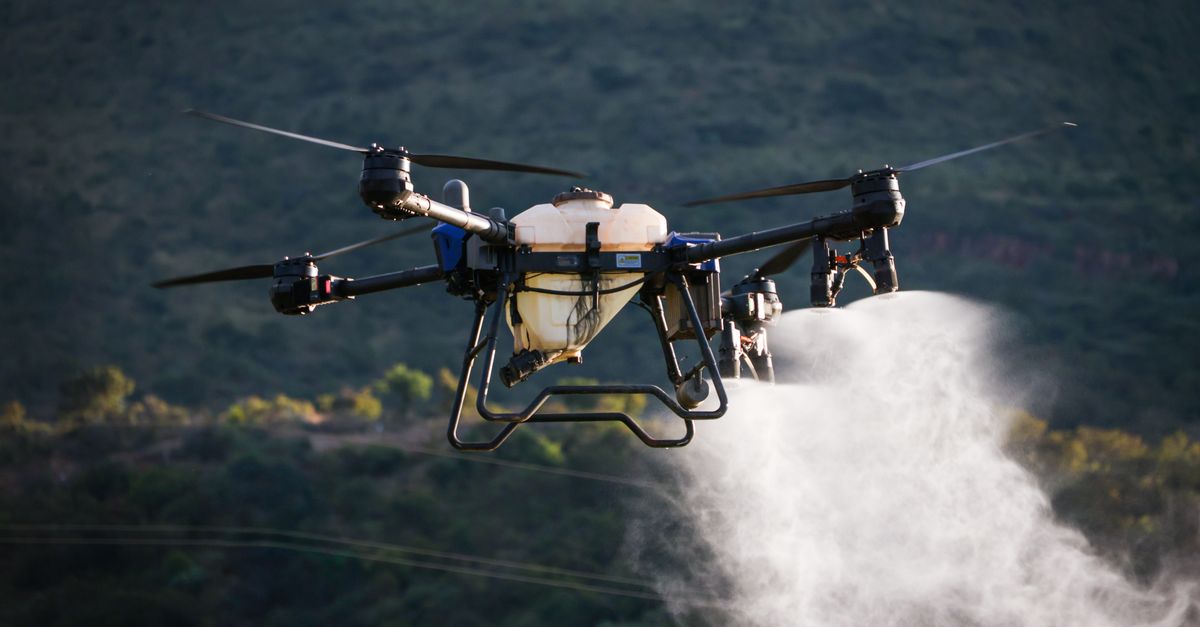
The Digital Transformation of AgricultureAgriculture is experiencing a significant shift fueled by drones and robotic systems. These tools are transforming the way farmers observe their fields, identify signs of stress, and manage inputs like fertilizers and pesticides. By integrating aerial insights, terrestrial robotics, and advanced data analysis, contemporary farms are becoming more accurate, productive, and environmentally conscious.How Drones Enhance Crop Surveillance EffortsDrones, often referred to as unmanned aerial vehicles, have emerged as vital instruments for monitoring crops in real time, using sophisticated sensors and cameras to deliver observations that were once costly or impractical to gather on a broad scale.Multispectral…
Read More
Burberry's new star shows off debut collection in London ...

The impact of Riccardo Tisci on luxury and street style fusion

Riccardo Tisci stands at the intersection of high fashion and street culture, blending the exclusivity of luxury houses with the authenticity of urban style. Over the last two decades, Tisci has not only navigated but actively redefined the boundaries between these fashion realms, shaping luxury streetwear into a global phenomenon. As the creative director of renowned fashion houses such as Givenchy and later Burberry, Tisci’s impact reverberates across designers, celebrities, and consumers alike.Formative Years and the Roots of Hybrid StyleRiccardo Tisci’s early years laid the groundwork for his distinctive vision, shaped in Italy and refined through his studies at Central…
Read More
Why is stakeholder capitalism changing reporting and disclosure expectations?

How stakeholder capitalism leads to more credible disclosures

Stakeholder capitalism is a model of value creation that expands corporate responsibility beyond shareholders to include employees, customers, suppliers, communities, and the environment. This shift recognizes that long-term business success depends on managing impacts and relationships across a wider ecosystem. As companies adopt this model, reporting and disclosure expectations are changing because stakeholders require credible, decision-useful information about how organizations create value over time.Why Reporting Expectations Continue to ClimbMultiple factors are rapidly intensifying the push for more comprehensive, detailed, and consistently standardized disclosures.Investor pressure: Major asset managers are increasingly weaving environmental, social, and governance considerations into how investments are evaluated,…
Read More