
Our website uses cookies to improve and personalize your experience and to display ads (if any). Our website may also include third-party cookies from services such as Google AdSense, Google Analytics, and YouTube. By using the website, you consent to the use of cookies. We have updated our Privacy Policy. Please click the button to view our Privacy Policy.

Science and Technology

El Salvador acelera la vacunación contra el VPH tras ampliar el rango de edad

Broad clinical confidence in mRNA therapies after global vaccine deployment

Messenger RNA platforms have evolved well past their original role as vaccine tools, extending into oncology, rare conditions, cardiovascular therapies, and other fields as scientific validation, production efficiencies, regulatory experience, and persistent clinical gaps converge. The very attributes that supported swift action during the pandemic are now being applied to transform the way medicines are conceived and delivered.From Initial Proof of Concept to Widespread Clinical TrustThe worldwide rollout of mRNA vaccines offered extensive real-world confirmation that synthetic mRNA can be effective, scalable, and generally well tolerated, with hundreds of millions of administered doses showing that short-lived protein production can trigger…
Read More
How are drones and robotics changing crop monitoring and spraying?

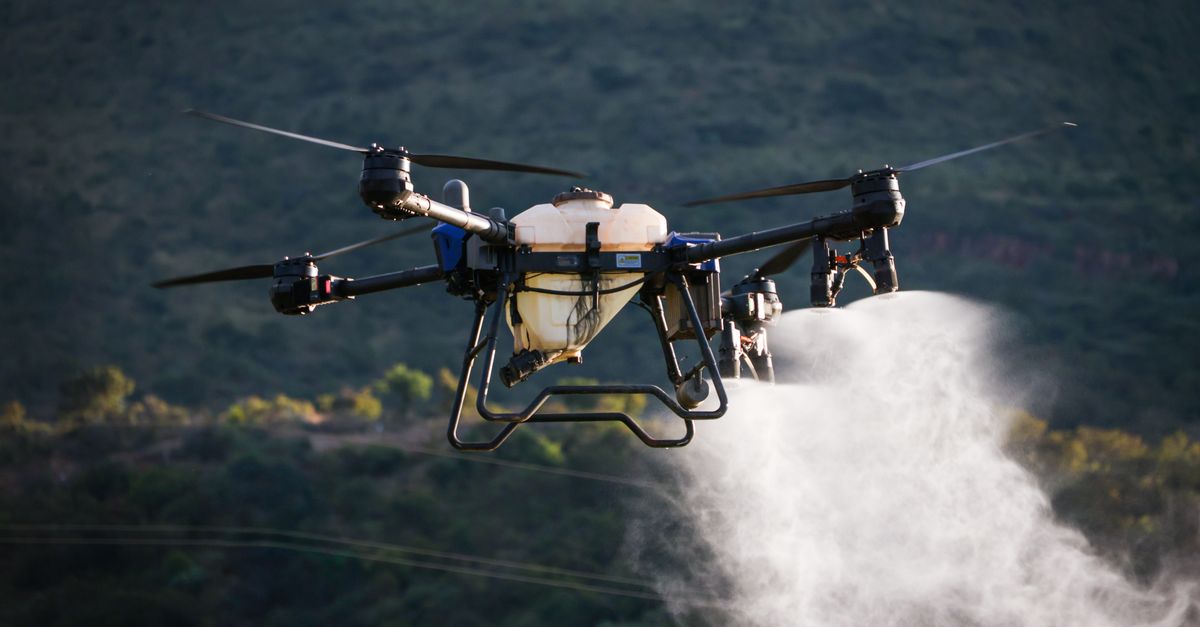
How drones and robotics enable precise crop monitoring and input application

The Digital Transformation of AgricultureAgriculture is experiencing a significant shift fueled by drones and robotic systems. These tools are transforming the way farmers observe their fields, identify signs of stress, and manage inputs like fertilizers and pesticides. By integrating aerial insights, terrestrial robotics, and advanced data analysis, contemporary farms are becoming more accurate, productive, and environmentally conscious.How Drones Enhance Crop Surveillance EffortsDrones, often referred to as unmanned aerial vehicles, have emerged as vital instruments for monitoring crops in real time, using sophisticated sensors and cameras to deliver observations that were once costly or impractical to gather on a broad scale.Multispectral…
Read More
Why is methane detection technology advancing so quickly?

The convergence of factors boosting methane detection progress

Methane detection technology is advancing at an exceptionally swift rate, surpassing the progress seen in many other environmental monitoring systems, and this surge is far from random as it stems from a mix of climate pressures, regulatory demands, technological leaps, and economic motivations that position methane as both a major challenge and a manageable one, making it clear that these combined factors illuminate why innovation in this sector is accelerating more rapidly than ever.The Climate Impact of Methane Has Become Impossible to IgnoreMethane is responsible for roughly 30 percent of global warming since preindustrial times. Although it persists in the…
Read More
What trends are driving bio-manufacturing and fermentation-based production?

Trends pushing bio-manufacturing towards greener production methods

Bio-manufacturing employs living cells, enzymes, and broader biological systems to generate materials, chemicals, foods, and medicines, and fermentation-driven processes stand at the heart of this discipline, with bacteria, yeast, and fungi transforming feedstocks into high‑value products. Previously focused mostly on pharmaceuticals and food components, these methods are increasingly being applied to fuels, materials, agriculture, and a wide range of consumer goods, and multiple influential trends are hastening this evolution.Escalating Climate Demands and the Move Toward Low-Carbon ProductionOne of the strongest drivers is the global need to reduce greenhouse gas emissions and resource intensity. Traditional petrochemical manufacturing is energy-intensive and dependent…
Read More
Why smartphone and PC roadmaps increasingly depend on NPUs and AI chips

Why smartphone and PC roadmaps increasingly depend on NPUs and AI chips

Neural Processing Units, commonly called NPUs, are specialized processors designed to accelerate artificial intelligence and machine learning workloads. Unlike CPUs, which handle general-purpose tasks, or GPUs, which excel at parallel graphics and compute operations, NPUs focus on matrix math, inference, and on-device learning with extreme efficiency. Alongside NPUs, the broader category of AI chips includes dedicated accelerators integrated into system-on-a-chip designs or offered as discrete components in PCs and servers.Over the last half decade, AI workloads have steadily moved away from cloud‑first computation and toward on-device intelligence. This transition is fueled by calls for reduced latency, heightened privacy, and improved…
Read More
Why is AI governance becoming a core requirement for regulated industries?

The regulatory drivers behind mandatory AI governance adoption

Artificial intelligence is rapidly moving from experimental deployments to mission-critical systems across regulated industries such as finance, healthcare, energy, telecommunications, insurance, and pharmaceuticals. As AI increasingly influences decisions with legal, ethical, and societal impact, governance is no longer optional. It is becoming a foundational requirement driven by regulation, risk management, and public accountability.The Growing Influence of AI Across Critical Operational SettingsRegulated industries adopt AI to improve efficiency, accuracy, and scalability. Examples include credit scoring models in banking, diagnostic algorithms in healthcare, fraud detection in insurance, algorithmic trading in capital markets, and predictive maintenance in utilities. These systems often operate at…
Read More
ChatGPT to start showing users ads based on their conversations

Emerging ethical debates around AI-generated scientific results

Artificial intelligence systems are now being deployed to produce scientific outcomes, from shaping hypotheses and conducting data analyses to running simulations and crafting entire research papers. These tools can sift through enormous datasets, detect patterns with greater speed than human researchers, and take over segments of the scientific process that traditionally demanded extensive expertise. Although such capabilities offer accelerated discovery and wider availability of research resources, they also raise ethical questions that unsettle long‑standing expectations around scientific integrity, responsibility, and trust. These concerns are already tangible, influencing the ways research is created, evaluated, published, and ultimately used within society. Authorship,…
Read More
Why are vision-language-action models important for next-gen robots?

Why Vision-Language-Action Models Are Crucial for Future Robots

Vision-language-action models, often abbreviated as VLA models, are artificial intelligence systems that integrate three core capabilities: visual perception, natural language understanding, and physical action. Unlike traditional robotic controllers that rely on preprogrammed rules or narrow sensory inputs, VLA models interpret what they see, understand what they are told, and decide how to act in real time. This tri-modal integration allows robots to operate in open-ended, human-centered environments where uncertainty and variability are the norm. At a high level, these models connect camera inputs to semantic understanding and motor outputs. A robot can observe a cluttered table, comprehend a spoken instruction…
Read More